
Welcoming Konstantin Boyko to the GECA Steering Committee
We are excited to announce that Konstantin Boyko, CEO/Co-founder of LenderKit and Crowdspace, has joined the Steering Committee of the Global Equity Crowdfunding Alliance (GECA). Konstantin brings a robust background with over 15 years in the FinTech and crowdfunding sectors, enhancing our collective expertise.
Profile of Konstantin Boyko
Konstantin's contributions to the crowdfunding world through LenderKit— software that facilitates the launch of capital-raising and crowdlending platforms—are well-recognized. His work has influenced crowdfunding operations in regions including MENA, USA, Europe, and Asia, reflecting his global outlook and commitment to financial technology innovations. Additionally, his involvement with CrowdSpace, an educational hub for the crowdfunding community, demonstrates his commitment to fostering industry growth and collaboration.
His engagement in substantial industry research and analysis, particularly in collaboration with the Crowdfunding Research Center in Adger, Norway, underscores his commitment to the crowdfunding community's growth and learning. Konstantin's academic pursuits, including an advanced study in Mathematics, equip him with a unique analytical approach to solving complex FinTech challenges.
As a new member of GECA's Steering Committee, Konstantin will help guide our strategic direction, particularly in enhancing technological adoption across global markets. His vision for integrating advanced digital tools aligns with GECA's goals of fostering accessible and efficient crowdfunding platforms worldwide.
Konstantin's involvement is set to be instrumental in our ongoing initiatives, contributing to our mission of shaping a seamless and inclusive framework for global equity crowdfunding. Welcome, Konstantin! We look forward to the innovation and leadership you bring to our alliance.
For further information on Konstantin’s initiatives, please visit Lenderkit and Crowdspace

CrowdCon 2024: Strategic Insights for GECA as We Work Towards a Unified Future for Equity Crowdfunding
The 13th edition of CrowdCon, held on September 26-27, 2024, in Brussels, served as a significant forum for the European crowdfunding sector. Co-hosted by Eurocrowd and Fintics, the conference brought together industry leaders to address complex issues around regulatory alignment and the evolution of digital finance. Established in 2013, Eurocrowd has positioned CrowdCon as a central event for shaping the future of crowdfunding through rigorous policy discussions and cross-sector collaboration.
GECA’s Strategic Engagement at CrowdCon 2024
At CrowdCon, the Global Equity Crowdfunding Alliance (GECA) took a dedicated approach, taking part in key discussions on regulatory convergence within a growing and often challenging digital finance ecosystem. This year’s event presented GECA with an invaluable chance to expand its network and learn from those who have previous experience in navigating regulatory complexities. In a landscape where EU crowdfunding has often been constrained by fragmented regulations, GECA’s involvement at CrowdCon represents an important step in positioning itself as a committed industry partner, focused on progressing sustainably on a Global level within this rapidly evolving field.
EU Market Challenges and the Evolution of Crowdfunding Regulations
The EU’s crowdfunding sector has historically trailed other global markets, largely due to regulatory fragmentation, which has hampered cross-border operations and elevated compliance costs. It could be said that this complexity has inhibited platform growth and limited financing diversity for small businesses and investors.
In November 2021, after years of advocacy and foundational work by Eurocrowd, the EU introduced harmonized crowdfunding regulations, granting platforms the ability to apply for an “EU passport” to operate across member states under one set of rules. This regulatory milestone reduces entry barriers, streamlines platform operations, and expands cross-border investment opportunities, all while enhancing investor protections. The framework is seen as a crucial, albeit challenging, pathway to transforming the European crowdfunding landscape.
GECA’s Mission and Approach at CrowdCon
For GECA, CrowdCon 2024 was an essential opportunity to contribute meaningfully to industry dialogue on regulatory and operational change in crowdfunding. Andrew Field, Executive Lead of GECA’s Steering Committee, led the alliance’s efforts, emphasizing that GECA aims to advance regulatory conversations and build a robust network of industry supporters while remaining acutely aware of the task’s magnitude. GECA’s objectives for CrowdCon included:
- Knowledge Exchange: Engaging with stakeholders to understand the practical impacts of EU regulations and learn from early implementation successes and challenges.
- Visibility and Advocacy: Communicating GECA’s commitment to data-driven policy-making, with an emphasis on working collaboratively to gather insights from across the sector.
- Networking and Learning: Learning from industry veterans and peers, particularly leveraging Eurocrowd’s substantial experience, and fostering best practices for regulatory engagement.
This involvement underscored GECA’s commitment to achieving an investment ecosystem that promotes innovation—one that will require a collective and sustained effort from all stakeholders. GECA’s dedication to bringing meaningful change was articulated but it was also emphasized that this journey is an incremental process requiring both collaboration and a profound understanding of the complexities involved.
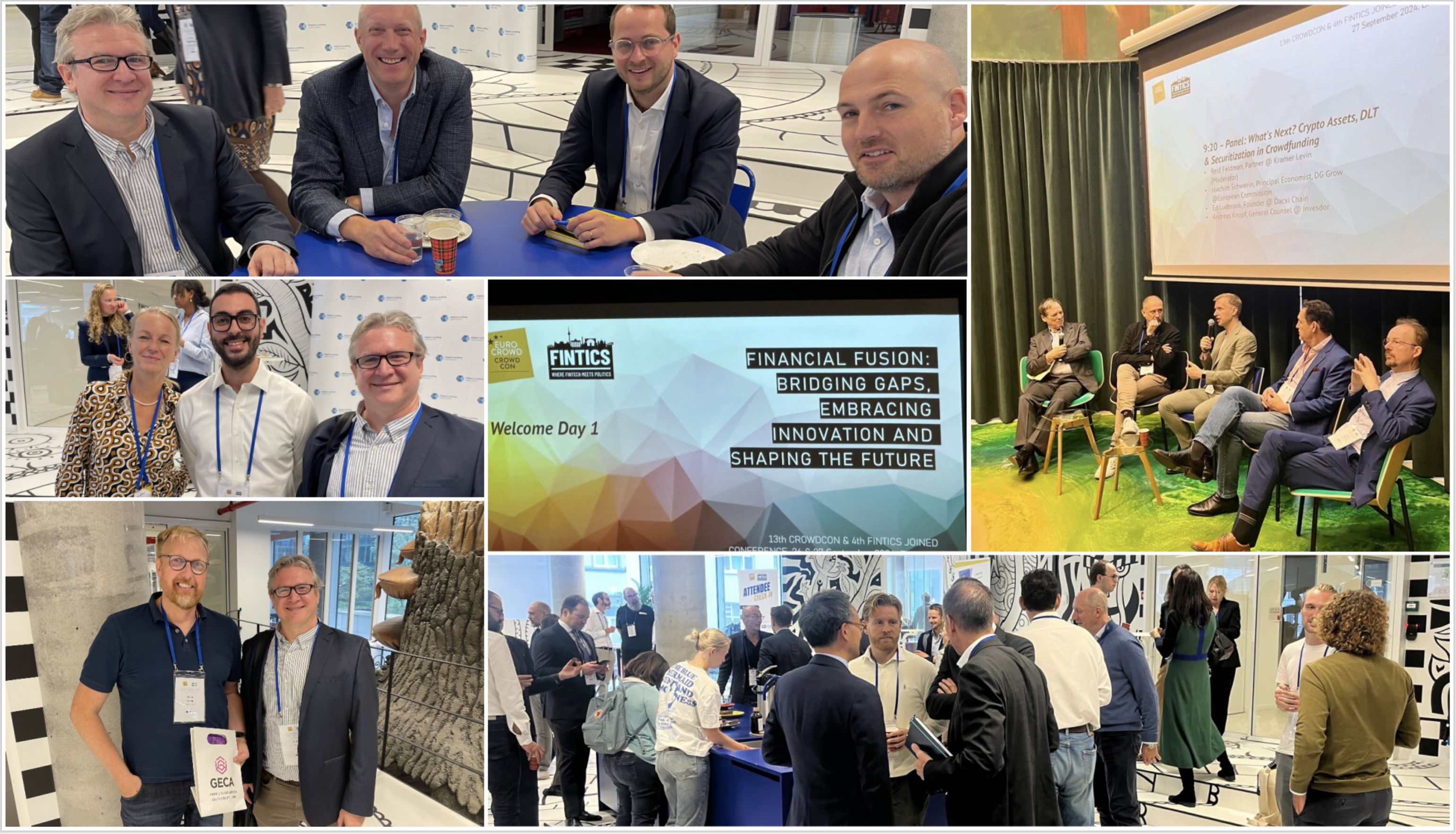
Key Takeaways from CrowdCon 2024: Progress and Future Challenges for Crowdfunding
- Regulatory Developments and Progress:
Mindaugas Valiulis from the European Commission led a discussion on the European Crowdfunding Service Providers Regulation (ECSPR). Three years into its implementation, ECSPR has achieved considerable progress. However, as Valiulis noted, unifying Europe’s crowdfunding landscape remains a work in progress. Joachim Schwerin echoed this, emphasizing the importance of ECSPR in creating a cohesive, cross-border environment for innovation but acknowledging the challenges that persist. - The Global Expansion Debate:
A panel discussion explored the complexities of international crowdfunding expansion, with Dacxi Chain providing insights into the potential of blockchain to bridge European and international markets. Ed Ludbrook - founder of Dacxi Chain, discussed the role of distributed ledger technology in facilitating large-scale investment from North America and Asia-Pacific into European projects, which, while promising, requires careful regulatory navigation to succeed globally. - Blockchain Innovations in Crowdfunding:
The potential of Distributed Ledger Technology (DLT) in equity crowdfunding was highlighted by Andreas Knopf from Invesdor and Dr. Johannes Schmitt of Nyala, who discussed blockchain’s role in simplifying bond registry processes. These advances are part of an emerging trend where digital innovation supports increased transparency and efficiency in financial products, though substantial regulatory groundwork will be needed for widespread adoption. - Crowdfunding for Social Good:
In a session led by Giselle Borg Olivier of Zaar Crowdfunding, discussions focused on the societal impact of crowdfunding, with leaders such as Charlotte Brandsma of Growfunding and Nuno Jorge of Goparity emphasizing the importance of public trust and engagement. These discussions highlighted crowdfunding’s capacity to fund community-centered initiatives, revealing its broader role as a social tool as well as a financial mechanism.
Key Insights and Emerging Trends in Global Equity Crowdfunding
- EU as a Global Benchmark:
CrowdCon discussions affirmed that Europe’s approach to regulatory harmonization could serve as a model for other regions. However, adapting this framework on a global scale will require substantial, coordinated efforts from regions worldwide to accommodate diverse financial ecosystems. - The Vision for a Global Crowdfunding Framework:
Attendees were optimistic about Europe’s progress and recognized the potential for similar frameworks in other regions to unlock international crowdfunding opportunities. Yet, these frameworks will need careful customization and collaboration to support meaningful cross-border investment. - Pathway to a Globalized Equity Crowdfunding Market:
Europe’s regulatory advances provide a promising foundation, but achieving a truly unified, global crowdfunding landscape will demand sustained collaboration and a deep understanding of regulatory constraints across regions.
Reflecting on GECA’s Growing Role and Future Directions
GECA’s Strategic Vision
Andrew Field’s session on “Innovation in a Borderless Investment Landscape” encapsulated GECA’s commitment to fostering a unified crowdfunding environment. During this discussion, Andrew outlined GECA’s strategy: a steady, multi-step approach toward becoming a trusted industry partner to help promote (where necessary to facilitate innovation) positive regulatory change. His insights conveyed GECA’s commitment to working alongside stakeholders, learning from the challenges they have faced, and positioning GECA as a practical, adaptable ally in a complex industry.
The positive feedback received from other delegates underscores GECA’s potential as a contributor to industry-wide change. However, Andrew was keen to stress that the journey toward a borderless investment ecosystem requires not only ambition but also a readiness to listen, learn, and refine strategies as GECA grows within the field.
Feedback and Growing Influence of GECA
Participant Reactions and Expanding Global Engagement
Attendees appreciated GECA’s constructive, solution-oriented approach to regulatory harmonization and were encouraged by the alliance’s commitment to engaging with complex industry issues. Notably, GECA’s network of supporters now extends beyond Europe, reaching regions such as the U.S., New Zealand, UAE, and Africa. This expanding international presence highlights GECA’s resonance in diverse markets, reinforcing its potential to build a harmonized framework for equity crowdfunding.
Increasing Relevance and Strategic Path Forward
The insights gained at CrowdCon validate GECA’s mission and reflect an increasing openness within the global crowdfunding community to align on best practices. As GECA grows its network and continues to engage with key stakeholders, its role as a catalyst for harmonization in equity crowdfunding becomes more attainable yet remains anchored in the need for sustained, collaborative effort.
Next Steps: GECA’s Strategic Vision and Planned Actions
- Building on CrowdCon Insights:
The conference provided GECA with valuable input, which will be instrumental in refining its strategic initiatives. The alliance is committed to making incremental changes that reflect both the needs of its members and the broader crowdfunding landscape. - Actionable Next Steps:
GECA will prioritize translating CrowdCon insights into tangible initiatives, ensuring that its approach aligns with the practical requirements of stakeholders and supports sustainable industry growth. - Continued Research, Engagement and Dialogue:
Looking ahead, GECA will host events that foster ongoing dialogue, helping members stay current with global trends and challenges in the equity crowdfunding sector. These sessions are designed to nurture collaboration, promote shared learning, and empower stakeholders to shape the future of equity crowdfunding. GECA will utilize it’s growing connection to conduct high quality primary research that will identify and capture the true needs and desires of start up businesses, investors and equity crowdfunding platforms on a Global basis.
Conclusion: Moving Towards a Unified Equity Crowdfunding Future
CrowdCon 2024 offered GECA critical insights into the current and future state of equity crowdfunding, with discussions underscoring a shift towards regulatory harmonization. However, achieving this vision will demand dedication, cooperation, and strategic adaptability. The industry’s support of GECA’s mission reflects a collective readiness to address regulatory challenges, but the path to a unified crowdfunding ecosystem requires both ambitious goals and a grounded understanding of the work required.
Invitation to Join the Mission
As GECA advances its efforts, it invites current and prospective supporters to join this journey, contributing to the development of a global crowdfunding framework. The insights from CrowdCon 2024 mark an important milestone, setting the stage for a future where cross-border investment can flourish through collaboration and informed, deliberate action.

Welcoming Aaron Shafton to the GECA Steering Committee
We are thrilled to announce that Aaron Shafton, Senior Director at DealMaker Securities (an affiliate of DealMaker.tech), has joined the Global Equity Crowdfunding Alliance (GECA) Steering Committee. Aaron brings a wealth of experience, passion, and strategic vision to the table, and we are thrilled to have him on board as we continue to strive to shape the future of global equity crowdfunding.
Aaron Shafton: An Innovative Leader in Capital Markets
Aaron’s career spans various industries, including fintech, e-commerce, and finance. Prior to joining DealMaker, he held positions at companies such as Shopify, Capital One, and Procter & Gamble. His diverse experience has provided him with deep insights into online capital raising and strategic business growth.
Joining DealMaker in 2019 as an early team member, Aaron played an important role in the company's impressive growth, and helped scale the team to over 100 employees. He has contributed in transforming DealMaker into a powerhouse in the equity crowdfunding industry. At DealMaker, Aaron leads a team focused on compliance, strategic partnerships, and capital markets innovation. His role is critical in guiding companies through sophisticated, large-scale transactions, ensuring they leverage DealMaker's cutting-edge technology to raise capital efficiently and effectively.
Aaron Shafton’s Role on the GECA Steering Committee
As part of the GECA Steering Committee, Aaron brings his deep expertise in capital markets and his innovative approach to equity crowdfunding. His insights will be invaluable as GECA works to create a truly borderless ecosystem where companies can raise capital from a global audience. Aaron’s commitment to community-building aligns perfectly with GECA’s mission to foster cross-border collaboration in equity crowdfunding, making investment opportunities accessible to everyone, regardless of geographical location.
We are excited about the impact Aaron will have as we work together to shape the future of equity crowdfunding. His leadership and forward-thinking approach will be critical in driving our collective vision forward, ensuring that equity crowdfunding becomes a mainstream avenue for companies and investors alike.
Welcome, Aaron, to the GECA Steering Committee! We look forward to collaborating with you and learning from your expertise as we continue on this journey toward a global equity crowdfunding future.
For more information on DealMaker, visit the DealMaker.tech website.
The Motivations and Implications of Retail Investors Investing Across Borders
As financial technology continues to evolve, the rise of cross-border crowdfunding and investment opportunities has opened a new frontier for retail investors. Historically, angel investors and venture capitalists were the primary sources of early-stage funding for startups, with geographical proximity playing a significant role in investment decisions. However, today’s retail investors can now participate in cross-border equity crowdfunding (ECF) with the click of a button, diversifying their portfolios with international ventures. But what motivates these investors to take on the added complexities of foreign markets, and what implications does this trend have on the global funding landscape?
Fragmented Capital Markets: Barriers and Opportunities
Cross-border investments have long been constrained by fragmented capital markets, particularly within regions like the European Union (EU). Each country in the EU operates under distinct tax regimes, legal frameworks, and regulatory standards, which limit the ease with which retail investors can support ventures in neighboring countries. While regulatory initiatives, such as the EU’s Capital Markets Union (CMU), aim to create a more integrated financial ecosystem, significant hurdles remain.
For instance, tax incentives that encourage local investing often disincentivize cross-border participation. The UK's Enterprise Investment Scheme (EIS) and Seed Enterprise Investment Scheme (SEIS) offer generous tax breaks to investors, but these benefits are restricted to domestic investments. As a result, retail investors may be less motivated to invest internationally, where such financial advantages are unavailable.
This fragmentation has led to a preference for local investment opportunities among angels and retail investors alike. Many cite ease of access, lower risks due to proximity, and the ability to personally monitor and engage with investee companies as reasons for their home-country bias. In many cases, information asymmetry—a lack of sufficient, reliable data about foreign ventures—also plays a role in this localized approach.
However, as crowdfunding platforms mature and scale, they are offering retail investors an alternative route to international markets, facilitating greater transparency and making investment opportunities more accessible. These platforms present a solution to the fragmented capital market by leveraging technology to bridge gaps in information and communication across borders.
Crowdfunding as a Bridge to Cross-Border Investment
Crowdfunding has emerged as a popular mechanism for overcoming traditional barriers to early-stage financing, particularly for retail investors. Equity crowdfunding (ECF) allows individuals to buy shares in startups or growing businesses, often with smaller ticket sizes compared to venture capital or angel investments. Retail investors, once sidelined in these early rounds of financing, can now contribute to global ventures via platforms that transcend borders.
This has led to a significant scaling of the audience for early-stage investments. The global crowdfunding market, particularly strong in Europe with the UK leading, has demonstrated rapid expansion. According to Polaris Market Research, from a valuation of USD 19.86 billion in 2023, the market is projected to grow to USD 22.12 billion in 2024 and is expected to reach USD 72.88 billion by 2032. During the forecast period from 2024 to 2032, the industry is anticipated to record a compound annual growth rate (CAGR) of 16.1%. This substantial growth underscores the increasing appetite for alternative investment vehicles. As crowdfunding platforms continue to expand internationally, they bring together a diverse pool of investors and startups from different regions, enabling cross-border participation in ways previously unimaginable.
Investor Motivations: More than Just Financial Returns
Research into the motivations of retail investors in equity crowdfunding reveals that financial returns are often not the primary driver for participation. In fact, studies show that intrinsic factors—such as emotional engagement, novelty, and a desire to support innovative ventures—play a crucial role in motivating cross-border investments.
In emerging markets like Malaysia, for instance, non-financial motivators such as trust, aesthetic appeal, and the emotional value of supporting a project outweigh traditional investment incentives like risk-adjusted returns. This trend aligns with the broader behavior of millennial investors globally, who are increasingly interested in investments that resonate with their values, whether that’s social impact, environmental sustainability, or technological innovation.
A study by M. Rajeswari and R. Magesh in India further highlights this trend, showing that younger, lower-middle-income investors are drawn to the equity crowdfunding model despite its higher risks, because they see it as a way to participate in the entrepreneurial ecosystem and make a difference, even if financial returns are not guaranteed.
Cross-Border Crowdfunding: The Role of Investor Attention
While crowdfunding platforms can scale their audience globally, attracting cross-border investments requires capturing investor attention. The "Attention Across Borders" study by Markku V.J. Maula and Anna Lukkarinen highlights the importance of investor attention in securing cross-border investments. Their research found that campaigns receiving international attention are significantly more likely to attract foreign investments.
This attention is often driven by targeted marketing efforts and the involvement of team members who share a nationality with potential investors, a factor known as co-nationality. For example, ventures with diverse teams may have an easier time attracting international backers because their team composition resonates with a broader audience.
However, once attention is captured, traditional barriers like geographic, cultural, and institutional distance become less relevant. Instead, platforms and ventures must focus on maintaining this attention through sustained engagement, transparency, and effective communication. Digital platforms like Invesdor, a European equity crowdfunding platform, have shown that with the right marketing and visibility, ventures can successfully secure cross-border investments despite the complexities of distance.
Policy Interventions and the Path Forward
As retail investors become more involved in cross-border crowdfunding, policy interventions are essential to ensure a level playing field and protect investors from the risks associated with international ventures. Harmonized regulatory frameworks, such as those being pursued by the EU under its CMU initiative, are crucial for scaling cross-border investment opportunities. These regulations aim to reduce the friction caused by legal, fiscal, and governance disparities between countries, making it easier for retail investors to participate in foreign ventures.
Platforms must also play a key role in educating retail investors about the risks and opportunities of cross-border investments. Tools that facilitate automated portfolio diversification, along with secondary markets to exit investments early, can help reduce risk and increase investor confidence. Furthermore, robust risk-assessment tools and transparent reporting mechanisms are necessary to mitigate the information asymmetry that continues to plague cross-border investments.
In addition to policy support, there is a growing recognition that angel networks and syndicates could help retail investors navigate cross-border deals. These networks could serve as intermediaries, building trust between investors and foreign ventures, while offering local expertise and due diligence that retail investors may lack. Angel groups that operate internationally, like Keiretsu Forum, have demonstrated that a chapter model—where networks in different countries operate under the same umbrella—can facilitate cross-border collaboration and investment more efficiently.
Scaling the Audience for Cross-Border Crowdfunding
The scaling of crowdfunding platforms into the international arena marks a pivotal shift in the global investment landscape. Cross-border crowdfunding not only democratizes access to high-potential ventures but also opens the door to greater financial inclusion. By allowing retail investors to participate in early-stage financing across borders, these platforms provide an alternative to the traditionally exclusionary world of venture capital and angel investing.
For entrepreneurs, the implications are profound. Successful crowdfunding campaigns often rely on a mix of domestic and foreign investments, with studies indicating that 40% of successful campaigns in Europe depend on cross-border capital to meet their funding goals. For startups seeking to scale globally, attracting international investors through equity crowdfunding can be the first step toward entering new markets and expanding their business beyond local borders.
For retail investors, the opportunity to participate in cross-border crowdfunding offers a chance to diversify portfolios and support ventures that align with personal values, but it also comes with challenges. Navigating regulatory environments, understanding foreign markets, and managing currency fluctuations are just a few of the hurdles that investors face. However, with the right tools and support from platforms and policy-makers, these barriers can be mitigated.
The Future of Cross-Border Investing
As crowdfunding continues to mature and expand across borders, it is reshaping the way retail investors think about early-stage financing. No longer bound by geography, investors can now engage with ventures around the world, motivated not only by the prospect of financial returns but also by emotional and social factors.
The implications for the global funding ecosystem are significant. Cross-border crowdfunding is democratizing finance, enabling retail investors to play a more active role in the entrepreneurial landscape and offering startups a new avenue for raising capital. For policymakers and platforms alike, the challenge lies in creating the right infrastructure—harmonized regulations, investor education, and risk management tools—that allows cross-border investing to thrive, while protecting the interests of retail investors and ensuring the long-term sustainability of this new financial model.
As the global crowdfunding ecosystem evolves, the next decade could see retail investors become major players in cross-border venture funding, potentially transforming how startups raise capital and scale globally. The future of cross-border equity crowdfunding will depend on the ability of platforms, policymakers, and investors to adapt to this new reality, embracing both the opportunities and the risks that come with investing across borders.
Closing Thoughts and Upcoming GECA Initiatives
In addition to exploring the current dynamics of cross-border crowdfunding, GECA (Global Equity Crowdfunding Alliance) is currently undertaking its own research among UK investors to delve deeper into their attitudes towards overseas investments. This research aims to uncover the motivations, apprehensions, and preferences of investors when considering funding opportunities beyond their domestic borders. Stay tuned for the revealing findings and insights from this study, which promise to enrich our understanding and strategies in the ever-evolving landscape of global equity crowdfunding.

GECA to Present at CrowdCon 2024: The Future of Borderless Equity Crowdfunding
The upcoming 13th CrowdCon & 4th Fintics Joint Conference in Brussels, on 26th & 27th September 2024, promises to be a pivotal event for the European crowdfunding ecosystem. This year's theme, "Financial Fusion: Bridging Gaps, Embracing Innovation, and Shaping the Future," highlights the growing importance of cross-border financial solutions. As a key player in the sector, the Global Equity Crowdfunding Alliance (GECA) will play a central role in shaping the conversation around borderless equity crowdfunding globally.
We are thrilled to announce that on day one, Andrew Field, Executive Lead of GECA’s Steering Committee, will be hosting Breakout Session 2: Global Equity Crowdfunding Alliance (GECA): Innovation in a Borderless Investment Landscape (15:40 on 26th September). The session will introduce attendees to GECA, explain our mission and vision and touch on the challenges and opportunities of expanding crowdfunding beyond borders, to create a unified global equity crowdfunding ecosystem.
Hosted by EuroCrowd, CrowdCon is the only event in Europe dedicated exclusively to crowdfunding, bringing together the most influential actors, policymakers, and advisors in the industry. With over 10 years of history, this conference has become a breeding ground for major deals, policy discussions, and transformative collaborations.
The Global Equity Crowdfunding Alliance (GECA) was founded with a singular vision: to unlock the potential of global, borderless equity crowdfunding. We are building a community where platforms, technology providers, and other key stakeholders can collaborate to overcome the challenges in enabling a truly global marketplace for equity crowdfunding.
What We Offer:
- Global Networking: GECA connects platforms and stakeholders across the world, fostering partnerships and opportunities for growth.
- Educational Resources and research: Through our exclusive workshops, members gain valuable insights into the complexities of cross-border operations.
- Industry Influence: As a GECA member, you’ll have the opportunity to participate in policy discussions that will help to shape and influence the future of global equity crowdfunding.
If you're attending CrowdCon, don’t miss the opportunity to talk to Andrew Field and other key leaders from GECA. Learn how you can be part of a transformative movement that’s breaking down borders and revolutionizing the way businesses raise capital.
Be sure to attend Breakout Session 2: Global Equity Crowdfunding Alliance (GECA): Innovation in a Borderless Investment Landscape at 15:40 on 26th September (day one), where Andrew will discuss how GECA is driving the future of cross-border investments.
Ready to Join GECA? GECA offers free membership for equity crowdfunding platforms and stakeholders. It’s simple to join – just fill out our membership form and become part of a network that’s shaping the future of global equity crowdfunding.
Click here or scan the QR code to join GECA and begin your journey toward a borderless crowdfunding future.

Contact Information: Andrew Field
Head of the Steering Committee, GECA
Email: andy.field@thegeca.org
Website: www.thegeca.org
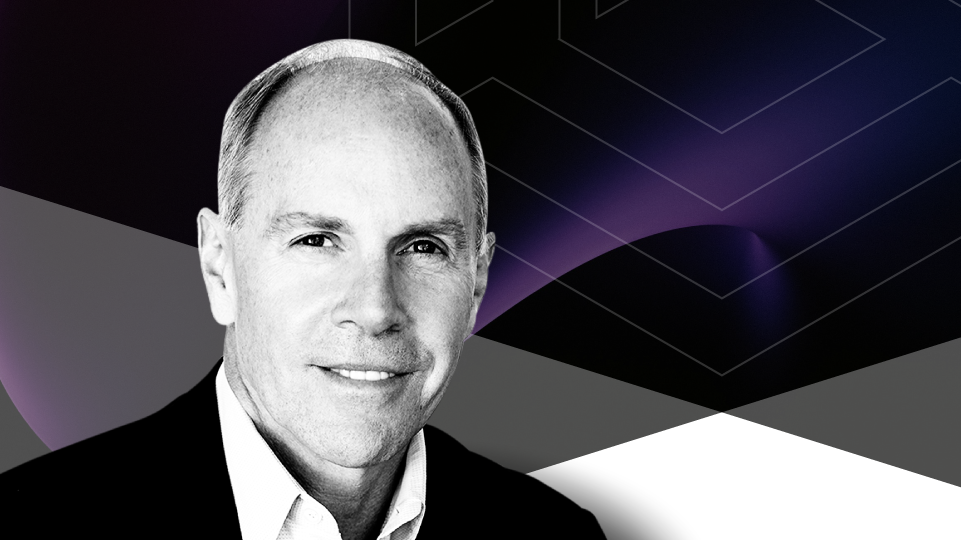
Welcoming Bruce Virga to the GECA Steering Committee: A Visionary Leader in Equity Crowdfunding
We are thrilled to announce the addition of Bruce Virga, CEO and Co-Founder of Title3Funds, to the Steering Committee of the Global Equity Crowdfunding Alliance (GECA). Bruce's journey through multiple industries, including fintech, software, and insurance, has been marked by his relentless pursuit of innovation, value creation, and democratizing access to private markets. His extensive experience, from scaling Design Science into an international success to founding a leading wholesale insurance company, has solidified his reputation as a forward-thinking leader.
Bruce’s leadership at Title3Funds embodies the mission of borderless equity crowdfunding. Under his guidance, Title3Funds has become a trusted resource for retail investors, connecting them with promising private company opportunities through a platform that emphasizes integrity, transparency, and regulatory compliance. His passion for making investment opportunities accessible to everyone aligns perfectly with GECA’s vision of creating a truly global investment community.
In joining GECA’s Steering Committee, Bruce brings his deep expertise and innovative mindset to our collective efforts to shape the future of equity crowdfunding on a global scale. His insights will be invaluable as we work towards building a borderless ecosystem where investment opportunities transcend geographical boundaries.
As Bruce continues to champion the cause of democratizing private markets, we look forward to his contributions in driving GECA’s mission forward. His vision of empowering retail investors and fostering a culture of trust and excellence within the crowdfunding space will undoubtedly help GECA achieve its goals.
Welcome, Bruce, to the GECA Steering Committee. We are excited to have you on board and look forward to the impact we will make together in advancing global equity crowdfunding.
Equity Crowdfunding: Global Trends, Strategic Scaling, and the Path to a Borderless Future
Equity crowdfunding (ECF) has emerged as a significant alternative financing method, particularly for small and medium enterprises (SMEs) and startups that struggle to access traditional venture capital or bank financing. The global landscape of ECF is shaped by various factors, including regulatory environments, competition among platforms, and macroeconomic events such as Brexit and the COVID-19 pandemic. This report examines the current state of equity crowdfunding globally, explores the challenges and opportunities for individual portals in different jurisdictions, and discusses the technological advancements that could enable a borderless equity crowdfunding ecosystem.
The Global Landscape of Equity Crowdfunding
1. Regional Overview
- United States: The U.S. has one of the most mature equity crowdfunding markets, thanks to the JOBS Act, which allowed for broader participation in equity crowdfunding. Platforms like SeedInvest and Wefunder have capitalized on this regulatory framework to become leaders in the market.
- Europe: The European equity crowdfunding market is fragmented, with different regulations across countries. The European Crowdfunding Service Providers Regulation (ECSPR), implemented in November 2021, aims to harmonize the rules across EU member states, making it easier for platforms to operate across borders. The UK, particularly, has seen significant growth in ECF, with platforms like Crowdcube and Seedrs leading the market. However, Brexit has introduced uncertainties, particularly concerning cross-border investments.
- Asia: In Asia, the equity crowdfunding market is still in its nascent stages, with varying levels of development across countries. Countries like Singapore and Malaysia have established regulatory frameworks that support ECF, while others are still developing their markets.
- Rest of the World: In regions like Latin America and Africa, equity crowdfunding is still emerging. Regulatory frameworks are being developed to support the growth of this financing method, but the market remains small compared to more developed regions.
2. Impact of Macro-Economic Events
- Brexit: The Brexit referendum has had a mixed impact on the UK's equity crowdfunding market. While it introduced uncertainties and reduced access to European funding, platforms have also seen opportunities as domestic investors turned to local projects. SMEs in the UK are likely to face increased challenges in accessing finance post-Brexit, necessitating stronger domestic crowdfunding ecosystems.
- COVID-19 Pandemic: The COVID-19 pandemic led to increased activity in equity crowdfunding, particularly in essential sectors like healthcare, financial services, and renewable energy. The pandemic highlighted the resilience of the equity crowdfunding model, as investors sought alternative investment opportunities during economic uncertainty.
3. Competition and Market Dynamics
Competition among equity crowdfunding platforms can be both a challenge and an opportunity. While increased competition can lead to fragmentation and investor fatigue, it can also drive innovation and market growth. The "blockbuster effect" observed in some markets, where popular campaigns boost overall investor activity, demonstrates the potential positive impact of competition.
The Way Forward for Individual Portals in Different Jurisdictions
1. Regulatory Navigation and Compliance
For individual equity crowdfunding portals to scale and succeed, navigating the regulatory landscape is crucial. Platforms must:
- Understand Local Regulations: Each jurisdiction has its regulatory framework, and platforms must ensure compliance to avoid legal challenges. For example, in the EU, compliance with the ECSPR is essential for platforms looking to operate across multiple countries.
- Advocate for Supportive Regulation: Platforms should engage with regulators to advocate for rules that support the growth of equity crowdfunding, such as tax incentives for investors and streamlined processes for SMEs.
- Adapt to Changes: As seen with Brexit and the introduction of ECSPR in the EU, regulatory environments can change rapidly. Platforms need to be agile and ready to adapt their operations to new rules.
2. Differentiation and Niche Focus
To stand out in a competitive market, platforms should consider:
- Specializing in Specific Sectors: Platforms that focus on niche markets, such as green energy, fintech, or social enterprises, can attract dedicated investor communities and build a strong brand identity.
- Offering Value-Added Services: Beyond facilitating investments, platforms can offer additional services such as due diligence, investor relations management, and post-funding support to attract both entrepreneurs and investors.
3. Scaling Operations
To scale successfully, equity crowdfunding platforms must:
- Leverage Technology: Automation, AI, and machine learning can streamline operations, reduce costs, and enhance the user experience for both investors and entrepreneurs.
- Expand Geographically: Platforms can explore opportunities to expand into new jurisdictions, particularly in regions with emerging equity crowdfunding markets. Strategic partnerships with local entities can ease entry into these markets.
- Focus on User Experience: A seamless and engaging user experience is crucial for attracting and retaining users. Platforms should invest in intuitive design, easy navigation, and efficient processes to enhance user satisfaction.
The Technological Future of Borderless Equity Crowdfunding
The future of equity crowdfunding lies in its ability to transcend borders, creating a truly global marketplace where investors can support projects regardless of their location. Several technological advancements will drive this evolution:
1. Blockchain and Smart Contracts
- Enhanced Transparency and Security: Blockchain technology can provide transparent and immutable records of transactions, enhancing trust between investors and entrepreneurs. Smart contracts can automate the execution of funding agreements, reducing the need for intermediaries and lowering costs.
- Tokenization of Equity: Tokenization allows shares of a company to be represented as digital tokens on a blockchain, enabling fractional ownership and easier transfer of shares. This could make equity crowdfunding more accessible to a broader range of investors globally.
2. Artificial Intelligence and Big Data
- Improved Due Diligence: AI and big data analytics can enhance the due diligence process by analyzing vast amounts of data to assess the viability of projects and the credibility of entrepreneurs. This can reduce the risk for investors and improve the overall quality of projects on crowdfunding platforms.
- Personalized Investment Recommendations: AI can also be used to provide personalized investment recommendations to investors based on their risk tolerance, investment history, and market trends, enhancing their experience and increasing their engagement.
3. Cross-Border Payment Solutions
- Seamless Transactions: The development of cross-border payment solutions, including cryptocurrencies and digital wallets, can facilitate seamless transactions across different jurisdictions, reducing currency exchange risks and transaction fees.
- Regulatory Compliance: Technology can also help platforms navigate the complex regulatory requirements for cross-border transactions, ensuring compliance with anti-money laundering (AML) and know your customer (KYC) regulations.
4. Global Investor Networks
- Crowdsourced Wisdom: Platforms can leverage global investor networks to create communities where investors share insights, discuss potential projects, and collectively decide on investment opportunities. This crowdsourced wisdom can lead to better investment decisions and greater success rates for campaigns.
- Cultural and Market Adaptation: By understanding the cultural and market differences in various regions, platforms can tailor their offerings to meet the needs of global investors, fostering a truly inclusive and borderless crowdfunding ecosystem.
Conclusion
The global landscape of equity crowdfunding is rapidly evolving, driven by regulatory changes, technological advancements, and shifts in investor behavior. For individual portals, the way forward lies in navigating regulatory challenges, differentiating themselves in a competitive market, and leveraging technology to scale and reach a global audience. The future of equity crowdfunding is borderless, with technology enabling platforms to transcend geographical boundaries and create a global marketplace where anyone can invest in promising ventures anywhere in the world. As the industry matures, platforms that embrace these trends and adapt to the changing landscape will be best positioned to thrive in this dynamic market.

The Inaugural 'GECA Leadership Exchange' Series Kicks Off
On August 19, 2024, leaders from across the global equity crowdfunding (ECF) landscape convened for the inaugural GECA Leadership Exchange. Organized by the Global Equity Crowdfunding Alliance (GECA), this session was not merely a meeting but a symposium of ideas aimed at sculpting the future of borderless equity crowdfunding. Under the guidance of Andy Field, participants embarked on a exploration of collaborative opportunities and challenges in the crowdfunding domain, particularly focusing on the area of cross-border equity crowdfunding.
The Essence of GECA's Leadership Exchange
The Leadership Exchange series was designed as a selective, invitation-only gathering, bringing together a geographically diverse group of industry leaders. This assembly was reflective of GECA’s commitment to fostering deep cooperation rather than just conventional networking. The format encouraged an open dialogue, moving away from presentations to a more dynamic and participatory discussion model.
Cross-Border Collaboration Takes Center Stage
One of the themes of the discussion was the potential and complexity of cross-border deal structures within the equity crowdfunding sphere. As countries and platforms grapple with varied regulations and market practices, the conversation illuminated the pressing need for a unified approach to facilitate international crowdfunding ventures effectively.
Participants shared their experiences and insights, underscoring the necessity for regulatory flexibility that could accommodate the rapidly evolving landscape of global crowdfunding. The diversity of the participants, including supporters from North America and Europe, brought a variety of perspectives to the table, highlighting both challenges and potential solutions in navigating different regulatory environments.
Current Landscape and Challenges
The dialogue examined the existing challenges that platforms face, including the need for robust technological solutions to support seamless cross-border operations. Ian Lowe, a member of the GECA steering committee and a prominent figure in the discussion, emphasised the importance of leveraging technology to build a network of crowdfunding platforms that could operate on a global scale without compromising their operational independence.
Envisioning the Path Forward
Looking ahead, the conversation transitioned into strategic planning. The participants discussed the potential pathways to overcome current limitations through collective action and technological innovation. The concept of a collaborative ecosystem, where platforms could share growth while maintaining their autonomy, was widely advocated.
Could IOSCO play a Role in Harmonizing Global Efforts
A significant portion of the discussion was dedicated to understanding how international regulatory bodies, like the International Organization of Securities Commissions (IOSCO), could play a crucial role in harmonizing financial regulations across borders. Ian Lowe’s insights into how engaging with IOSCO could lower barriers for global investor participation were particularly enlightening, offering a glimpse into the potential for creating a more interconnected and efficient global crowdfunding environment.
The Outcome and Future Steps
The GECA Leadership Exchange concluded on a note of optimistic commitment to ongoing dialogue and action. Participants agreed on the importance of continued collaboration, regular follow-up meetings, and strategic initiatives aimed at realising the potential of borderless equity crowdfunding.
Conclusion: A Call to Action for Future Collaboration
The inaugural GECA Leadership Exchange was just the first in a series of gatherings where stakeholders in the crowdfunding ecosystem can embrace the future of investment with open arms and interconnected strategies. The discussions underscored the alliance's commitment to not only understanding the current landscape but actively shaping its evolution.
For platforms and investors worldwide, the outcomes of this meeting signal a promising horizon for equity crowdfunding—one where innovation, cooperation, and collective growth are at the forefront. As GECA continues to pave the way for these transformations, its doors remain open to new members who are eager to be part of this exciting journey towards a truly global investment community.
This blog is not just a recap but an invitation: join GECA, engage with pioneers, and contribute to the reshaping of global equity crowdfunding. Together, we can turn the challenges of today into the achievements of tomorrow.

The Future of UK Crowdfunding: Crowdfunding Chronicles with Abhilasha Dafria | GECA Podcast
The Future of UK Crowdfunding: Crowdfunding Chronicles with Abhilasha Dafria | GECA Podcast
In this inspiring episode of Crowdfunding Chronicles, we explore the remarkable journey of Abhilasha Dafria, CEO of Angels Den and newest member of the GECA Steering Committee. From building her first startup in India’s nascent ecosystem to leading one of the UK’s prominent equity crowdfunding platforms, Abhilasha shares invaluable insights into the challenges and opportunities facing early-stage entrepreneurs across different geographies. Her unique perspective on the global nature of innovation highlights a critical imbalance: some regions rich in talent but capital-poor, while others have abundant capital but saturated markets. In this candid conversation, Abhilasha discusses her vision for transforming Angels Den into a comprehensive alternative finance hub, the importance of hybrid funding models combining dilutive and non-dilutive options, and her excitement about partnerships with Dacxi Chain and GECA to create truly borderless investment opportunities. Whether you’re an aspiring entrepreneur, investor, or industry professional, this episode offers practical wisdom on relationship building, market timing, and the future of cross-border equity crowdfunding.
ALSO AVAILABLE ON


Share this article


Andy Field: [00:00:00] Hello everybody. Welcome back to the Crowdfunding Chronicles. We’ve got a bit diff bit of a different one in today’s session. Today’s session is called A View from the UK A CEO’s Journey, and How Borderless Equity Crowdfunding Could Really Make a Difference. And I’m delighted to introduce Abhilasha Dafria, not only a new member of the GECA Steering Committee, but she’s also CEO of UK Equity Crowdfunding Platform Angels Den. So welcome Abhilasha, and thanks for joining us today.
Abhilasha Dafria: Thank you so much for having me, Andy. And finally getting to record this podcast with you.
Andy Field: Yeah it’s great to have you. And I think we can probably get straight into it, Abhilasha. I think I just want to start off by talking and telling everybody a little bit about your journey, how you got to where you are today, and how this gave rise to your position with Angels Den. So perhaps if you could maybe outline a few things, really, what first inspired you to enter the finance or the crowdfunding sector more specifically, actually?
Abhilasha Dafria: So [00:01:00] my career really started in India where I was building my first startup, which was also very similar to what Angel Den does in the UK. I was a part of India’s early stage startup ecosystem, which was extremely nascent at that time. There was not much talking about startups and venture capital and, these were all really early nascent terms that the ecosystem was still getting used to.
And just being part of such a nascent ecosystem taught me a lot of, a lot about the challenges and hurdles of small business owners and early stage entrepreneurs. So I set up my first company. The idea was to help early stage companies connect with the right ecosystem enablers and that went to connecting them first. to investors, to potential co- founders, to help them get talent on board and to connect them to the different ecosystem enablers of, in India at that time. Soon enough, I realized that, the capital is very limited to a bunch of people and the ideas are, way too many.
And these are [00:02:00] great ideas from great entrepreneurs with great educational backgrounds. And really smart guys, but they don’t know what is the next step to do. How do we, how do you go about executing your idea? And that’s when I thought that space of ambiguity is what I wanted to capture.
So I built my first startup with the idea of helping early stage companies scale from point A to point B in the shortest time. And, that led me to, understanding the equity crowdfunding, market a little more, in depth. Soon enough, I realized that, the South Asian potential is just too much.
And, South Asia is a very interesting geography to invest in. And I wanted to further democratize, the capital that was coming in, because the supply demand at that point was extremely skewed. So that’s when I started scaling my company to the UK, and to the West. So we had investors from the U S we had investors in Europe, life happened, London became home.
And, that’s when I realized that the equity crowdfunding [00:03:00] market is, it needs to be a little more global than what it is right now. Up until 2020, I did this, and helped early stage Indian companies raise capital from, foreign investors, but then, due to the pandemic, London just became home for me, so I had to roll back on all my activities , and think of having a future here, based out of the UK, and that’s when this opportunity with Angels Den came by, so it was super serendipitous for me.
It was exactly the same business, but a different geography. So the fundamentals of the business were the same. But the dynamics of the geographies were different. And that, that made it a very exciting opportunity for me to jump in because, I could just learn from all the mistakes that I did, when I was building my own company and I could use an established brand to grow.
So that’s how I’m here today.
Andy Field: That’s really, actually, that, yeah, like you say you’re solving, you, when you moved across to the UK, the problem was the same, the ideas and the entrepreneurial ship was, very [00:04:00] much outweighing the opportunities for investment.
And that was something that you obviously did very well at solving, in India and bringing that across to the UK was something that obviously you wanted to do. So that’s interesting. Great.
Abhilasha Dafria: Okay. One of the interesting observations was that there are geographies that have talent and very little capital, and then there are geographies that have capital and very little ideas because the market is too saturated.
It’s about leveling the playing field for everyone.
Andy Field: Yeah, that makes perfect sense. Just personally speaking then, before we get on to that sort of chapter in your career where you you joined Angels Den were there any significant milestones in your career, perhaps before you came to the UK, any key projects or achievements that you, that, that happened, perhaps when you were in India, that you’re particularly proud of and that still remains relevant now, you look back to perhaps and apply those to your career, some of the lessons learned, maybe, that you mentioned.
Abhilasha Dafria: It’s very interesting when you’re looking at fundraising for early stage companies, because there is a certain process and a certain [00:05:00] order in the chaos when you’re evaluating companies that are that early in the fundraising journey. And with every company, there’s a new lesson that you learn.
Because every deal is so unique. Every kind of investor is so unique in the, in, in the investment preferences that every time you try to, bring a pattern to it, you realize that the lesson is in treating every company individually with a very open minded approach. And that’s something that I learned over time because there is this human nature of, I’ve seen five of these companies.
The sixth one is going to be the, it’s going to follow the same pattern. And then you realize the sixth one is the outlier is going to give you all the returns. And so it’s just about. stepping back and saying that, I don’t know anything and let me just approach this with a very open minded attitude and see where this goes.
So that’s my biggest learning fundraising for companies in India. In terms of accolades, we have all our accolades and achievements and all the awards that you get, but I think [00:06:00] the biggest, the most rewarding feeling of being an early stage equity investor or fundraising for companies is the fact that, some of these companies that you have identified so early on they grow to become such impactful companies that, the it’s a very rewarding feeling to see something that you supported at a very early stage actually supporting the ecosystem at this point, and I see many of my companies in India doing so well, and that’s a great feeling.
Andy Field: Oh, that’s great. And I’m sure that happens in the UK now.
Abhilasha Dafria: Sometimes I’m in the tube and I look at an advertisement from one of our portfolio companies and I’ll nudge whoever’s sitting next to me. And I’ll tell them, look, we invested in that company.
Andy Field: Yeah, that’s a good feeling. I bet. Yeah, definitely. So you’re the CEO of Angels Den currently. Was it 2019 you joined the business?
Abhilasha Dafria: 21.
Andy Field: 21. Okay. So just Going back to those sort of early days, obviously pre pandemic which is probably going to feature in the answer to the question I’m about [00:07:00] to ask you is can you give me an overview of those early days and perhaps some of the initial challenges that you faced when you joined Angels Den?
Abhilasha Dafria: So when I came into this role in the July of 21, my vision with the company was to move away from being an archaic investment platform into something more 360 degree alternate finance. In my experience dealing with entrepreneurs across geographies and across sectors and of different shapes and sizes, I realized that not every Startup has the architecture to raise equity capital, and sometimes it’s just about that education to the founder, that there is a cheaper and a faster way to access capital than knock the doors of investors.
And I realized that the UK probably is one of the geographies that has least of of this knowledge or information out there in a more curated manner. So what I wanted to do was build Angel’s Den as the one stop shop for any financial [00:08:00] needs of early stage companies, whether these are SMEs or startups, or, small businesses, it could be brick and mortar businesses, B2B businesses, just anything.
So taking away the glory from equity funding and explaining this to entrepreneurs that, you know, there is a market out there where you can get access to capital quite quickly without diluting your shares. So this was the biggest challenge that I had faced and it was something that I wanted to execute.
When I came in and something that we did over the last three years. So that sort of whole awareness piece that there is an alternative was building that whole piece and make it like a one stop shop because Entrepreneurs do not know where to go. What is the right financial instrument for them given their trading history, given their circumstances where, what should they ask for?
Andy Field: Yeah. Yeah. And there needs to be like one place that gives them that information and also connects them to the right lender or the right investor, right? And that’s something that we are [00:09:00] looking to build. Yeah, and being able to achieve that is obviously pivotal to the success of your business.
Are there any, is there any particular strategy that you can pinpoint that, that perhaps is absolutely critical to making that happen? Making that awareness piece happen? Is it, is that something that’s still in progress?
Abhilasha Dafria: It’s still in progress, but I would I, I do think that we, there’s a lot of progress that we have made on this journey as well because again lending for early stage companies is not the easiest market because, there’s only little trading history.
There’s only so much size that the company has, and it makes it a little. tough for lenders to invest in companies at that stage. But what’s really beautiful is the fact that the financial industry is also evolving as rapidly as the technological landscape is. And, so they are the lenders and investors, both with higher risk appetite now who have different metrices that they would use to invest in early stage companies, whether it’s in form of a debt [00:10:00] instrument or or equity.
And it’s about bridging that gap and bringing everyone together on one platform. So they have the right data points as well to, to judge correctly. What is the company they want to, not
Andy Field: Yeah. And make that informed decision almost. Yeah. Yeah, absolutely. Yeah. Okay, so there’ll have been lots of challenges that you’ve overcome in where you are now.
Yeah, are there any that spring to mind in particular challenges that you’ve had to overcome and perhaps any lessons you’ve learned doing that, more recently in your career path to date? Is there anything that you could share from that respect?
Abhilasha Dafria: I think one of the interesting learnings for me as an entrepreneur, almost in this role and also for maybe fellow entrepreneurs would be the fact that the equity market is so cyclical that they could be, you could be raising funds in a bull market and you have no idea when the market will revive again.
for you to raise your next round. So it’s so important to [00:11:00] time the market. And bear in mind that every time it’s easy for you to raise funds, there’s going to be, the dry years coming, not just months. And then you have to prepare your spending. And your expenditure and your cash flow due to accommodate for those months as well.
And that’s something I realized with Angels Den that, just pegging on the equity market would not be enough for us. And, We need to figure out how to hedge our own revenue sources. So just raising capital through equity could be a great year in 2021, but then just could absolutely crash in the next year.
And so how do we de risk ourselves by finding more ways of, getting revenue into the company. And that’s why, the whole hybrid model of dilutive and non dilutive works so beautifully for companies. That’s, I think that’s been my biggest lesson that to understand that the market is extremely volatile in early stage and that you have to time it when you’re looking at your own fund raise or in our case, revenues.
Andy Field: Yeah, that makes perfect sense. Okay, thank you for [00:12:00] that. So just moving on to the sector in general, how would you say that the UK equity crowdfunding sector has evolved since you started in the UK? So your company’s role and an influence in this sort of evolution of the sector and speaking on behalf of your business, what so what would you say is the company’s vision for the future?
of equity crowdfunding? How, how does it involve, for example, the enablement of international deal flow? This borderless scenario, the truly borderless scenario that we talk about, certainly with GECA. How does, how do you see the future taking that into account?
Abhilasha Dafria: I think the future is borderless for technology companies and therefore the opportunity to invest in these companies early on should be as borderless.
I, I respect the jurisdictions and the local frameworks that equity companies need to work within. But I can also appreciate the amount of opportunity and the Capital pool that it would unlock for early stage companies. If equity [00:13:00] crowdfunding could truly be global.
So I see the UK market headed there because UK as a market, if you look at it there’s so much of important export happening that, it’s really, it’s an, it’s international trade and ties are really strengthening year on year. And so I see. This happening for the equity crowdfunding market as well.
It’s a matter of time and it’s about getting frameworks, right? That’s where I see the UK market heading in the next couple of years.
Andy Field: Yeah, that makes perfect sense. Yeah, I suppose the technology we all know is there to implement this kind of solution, but there are other things that obviously that it needs a bit more work for us to be able to get there.
But of course, that’s what GECA are there for. Do you have any upcoming projects or initiatives, either, centered around that or not actually that you’re particularly excited about as CEO of Angels Den?
Abhilasha Dafria: I’m really excited about seeing the non dilutive landscape. Pick up in the UK.
And the whole hybrid investing model for early stage companies. [00:14:00] That’s one. I’m really excited about a partnership with Dacxi Chain and GECA. Just to understand how we can bring, UK investors and at the same time take UK companies to the Middle East. To Australia to South Asia to the U.S. How do we open up these borders and these geographies? At a click of a button. And that’s something that Dacxi and GECA are really advocating for and looks really exciting for us.
Andy Field: Yeah, I think that’s a really good point actually, because we talked about the benefits of borderless equity crowdfunding for the early stage companies, but it’s also, there are also benefits for investors out there, there are obviously there are obvious benefits really the pool of investment opportunities just grows considerably once, once we achieve that vision.
So thank you so much for that. So we’re actually, we’re running out of time for today’s episode, Abhilasha, and I’m sure we’ll get you back on and have a chat about a few other bits and, that we could talk about connected to the [00:15:00] industry. But I’ve really enjoyed hearing about, and I’m sure our listeners have enjoyed hearing your background thoughts on the industry.
But before we go, we can’t end without asking for a little bit of advice. for aspiring leaders in the equity crowdfunding industry. So just a couple of questions around that if that’s okay with you. What would be, could you think of a key lesson that you’ve learned as a leader in the industry aside from obviously some of the the planning ones that you mentioned earlier?
Abhilasha Dafria: Relationship is key, being authentic, building trust, that’s something that is very integral to our roles as, leaders in the equity crowdfunding space. And, when you’re connecting X to Y, sometimes you don’t make the revenue out of that connection in that moment, and you make it years later.
It’s important to build on those relationships and build it with. Tremendous trust. That’s something that investors always fall back on a goodwill, reputation and, just clear communication and trust.
Andy Field: And I suppose that’s good advice for any sort of aspiring [00:16:00] entrepreneurs or professionals in the sector, not just in the sector, actually just generally.
Final point. You’re clearly incredibly busy. How do you maintain that sort of healthy work life balance? Have you got any personal habits, routines that help you stay focused, productive, that give you that work life balance?
Abhilasha Dafria: I’m terrible with my work life balance, but my work is my life and my life is my work and that’s almost toxic to say that but I really enjoy doing what I do because that’s the only thing I’ve done for the last since I started my career.
So I absolutely enjoy my work. And I think when you just enjoy doing what you’re doing you, you don’t realize where work ends and life begins. begins and you seem to be okay with it. So unless, there’s somebody else complaining, I think I can keep my day going on.
Andy Field: Brilliant. That’s great. Thank you so much. Once again, Abhilasha for joining us today, really interesting, really insightful. We’ll definitely get you back on listen out for the next episode, which will be coming soon of the ‘Crowdfunding Chronicles’ the GECA podcast. We’ll be coming on very soon with the next episode [00:17:00] and we look forward to catching you then.
Thanks very much. Bye bye.
Abhilasha Dafria: Bye.
Beyond Borders: Crowdfunding Chronicles with Ian Lowe Part 2 | GECA Podcast
Beyond Borders: Crowdfunding Chronicles with Ian Lowe Part 2 | GECA Podcast
In part two of this groundbreaking Global Crowdfund Chronicles episode, Ian Lowe takes us deeper into the practical implementation of cross-border equity crowdfunding solutions. Building on the regulatory challenges discussed in part one, Lowe reveals how Dacxi Chain’s decentralized API infrastructure is actively connecting established platforms across jurisdictions through both referral and direct investment models. This episode explores cutting-edge developments including equity tokenization for enhanced liquidity, emerging hybrid partnerships between venture capital and crowdfunding platforms, and the real-world progress being made by pioneering platforms already operating within these global networks. From smart contracts to secondary exchanges, discover how blockchain technology is creating new opportunities for retail and sophisticated investors alike. Lowe also shares his optimistic outlook for global interoperability and emphasizes the critical role of industry collaboration through organizations like GECA in advancing borderless investment opportunities. This is essential listening for anyone seeking to understand how cross-border equity crowdfunding is evolving from concept to reality.
ALSO AVAILABLE ON
Share this article
Andy Field: [00:00:00] Hello, everybody. Welcome back to the second of the Doubleheader Global ‘Crowdfund Chronicles’ podcast. This is the second part of identifying the challenges of cross border equity crowdfunding. My name’s Andy Field. I’m the executive lead of the GECA Steering Committee. And once again, I’m going to be your host today.
I’m delighted to welcome back Ian Lowe to the Chronicles to continue our chat about identifying the challenges of cross border equity crowdfunding. And just to recap, Ian’s a member of the GECA steering committee, but his day job is that he is CEO of Dacxi Chain, who are a fintech company who are transforming equity crowdfunding by connecting platforms from different jurisdictions around the world into a single network.
Welcome back, Ian.
Hi Andy.
Hi there. So Ian, we talked last time, in some depth actually about some of the regulatory challenges that we need to consider as we strive to break down the borders of equity crowdfunding. And we also talked about how technology can help play a part in all of [00:01:00] that in facilitating our efforts.
I’d just like to move on a little bit from that just to continue the theme, and you’re working in this area specifically with Dacxi Chain. So I’d like to talk a little bit about some of the progress that we’re making, and I was wondering whether you would be able to give us any insight into perhaps some of the situations that you’ve experienced with Dacxi Chain, where platforms are looking to navigate around these cross border challenges.
Ian Lowe: Yes, certainly Andy, I’d be pleased to. So look, first of all, the Dacxi Chain infrastructure technology is built specifically to coordinate and automate this process. Okay, so a decentralized network infrastructure, a set of open APIs where platforms can collaborate directly with each other. So what that means in literal terms is I’m a platform, I secure a deal with an issuer, I expose that deal to my [00:02:00] crowd on my platform, but I can now also push that into a purpose built API.
And on the other end of that API, there are other platforms in other jurisdictions that are able to ingest all the parameters that articulate and describe that deal and present that same deal inside their own platforms. Okay. Now, once we get to that point, there’s really two ways in which this is able to unfold.
And both of these have been built into the technology. The first is what we call a referral model. And so this is where let’s just take a simple example of two platforms, platform one and platform two. So if platform one secured the deal with the issuer, they expose that deal through the Dacxi Chain APIs to the network and platform two is able to then ingest that deal and present that deal in their own catalog on their own [00:03:00] platform.
The referral model is where, depending on the type of investor and in particular retail investors, there are often jurisdictions—or there are often rather restrictions in certain jurisdictions, not all of them—that would prevent Platform 2 actually securing investment money on behalf of Platform 1, and then essentially transferring that money back. Okay? The referral model is just saying, okay, Platform 2 is exposing this deal, which originated with platform one, to their crowd. And then if one of their own crowd is interested in this deal, they click on “show me more” or “view offer document,” whatever it might be, and they are redirected to platform one where they can register and get full access to the deal and ultimately invest.
The second model is a model where everything up to the point where the investor [00:04:00] decides that they want to see the offer document is exactly the same, except they would actually place their investment on platform two, and then platform two will redirect those funds back to platform one where they can in turn be passed on to the issuer in return for the equity that is issued to that investor.
Okay, so we’re talking about a hybrid of different models working side by side, not just deal by deal. This hybrid would exist within a single deal where certain jurisdictions are operating under a referral model. Other jurisdictions might be operating on the decentralized model. And indeed, different investors from the same platforms might be operating on either of those models, depending on the restrictions that apply in both the market where the deal was secured and also the market or jurisdiction of the [00:05:00] platform that the deal has been shared with. Okay.
So what we’re really talking about here is work that is happening right now—working with established, extremely credible platforms that have been in market for a number of years, have a viable business. They operate under a set of regulatory rules. And they are, on that basis, an approved provider of equity crowdfunding as a platform—and allowing those platforms to collaborate through that purpose built infrastructure, share deals. And of course, by virtue of that, what we talked about previously, what we’re achieving is we’re going from a crowd of X to X + Y. And then as the network builds—and that’s work that’s happening right now—as the network builds, the size of that crowd increases [00:06:00] exponentially.
To answer your question—there’s a bit of background about how it actually all works. It gets a lot more complicated than that, which I won’t go into right now. But this is happening right now. So, there are platforms that are well established in different jurisdictions who are now doing this work to share deals with each other through the Dacxi Chain infrastructure via the APIs that sit within that infrastructure and, by virtue of that, significantly expand the crowd that is exposed to any single deal.
And of course, this is working in all directions, not just from 1 to 2 or 2 to 1. But as the network expands, we get that network effect where deal flow increases significantly, the size of the crowd increases significantly and ultimately the amount of capital that is, that can be raised successfully, is increased significantly.
Andy Field: So would it be fair to say then that in your experience there is a desire and a will to overcome some of these challenges? You’re working with people right now who are looking to do exactly that in various different ways. So there’s definitely—
Ian Lowe: Unambiguously. Yeah. So that, in many respects, would almost be an understatement.
So the platforms that we talk to—it’s important in these early stages that we partner with platforms that have a real appetite to get in the trenches and do the work with us because we’re really pioneering this in partnership with them. So there’s work being done in this process that doesn’t have to be done again. If you like, it’s being done on the basis that we are pioneering this. But their appetite to see this come alive is every bit as strong as our own. Okay, they see this as good for their business. They see this as good for the industry. And they see the bigger effect that this can have as it scales, whereby just quite simply more capital becomes available to fund more innovation. [00:08:00] Okay. And so in terms of equity crowdfunding’s participation in the overall funding of the enterprise economy, this is a complete game changer as we start to build scale into that network.
Andy Field: Yeah, that’s really interesting. And you probably won’t be surprised to hear that doesn’t come as a big surprise to me, given the aims and objectives of GECA as an alliance are to obviously navigate some of those potential barriers to operating in a truly borderless environment. So that’s really interesting.
And so regarding the future—because obviously you have two hats to wear. You are CEO of Dacxi Chain, but you also play an active part in GECA. Both yourself, personally (you are on the steering committee), and also Dacxi Chain are active supporters. So perhaps with both hats on, I suppose the next question I’ve got really is: what trends do you see shaping the future of cross border equity crowdfunding? How do you think that’s going to pan out?
Ian Lowe: First of all, we’re making the first steps in this [00:09:00] direction. And so the number of platforms that are willing and able to participate—we’ve already got a number of those that we’re talking to and bringing them into the fold. This is something that the industry wants universally. And I might add, whether you’re a really big player or whether you’re a smaller player, this idea of having access to a larger crowd is seen as universally beneficial.
Benefits all the stakeholders, benefits all the platform providers in all of the markets. But in terms of some of the other trends that we’re seeing more generally, one of the really interesting developments over the last 12 or 18 months—and we’re seeing more and more of this—is hybrid models emerging as it relates to raising capital through the issuing of new equity.
We’ve had these very distinct channels of capital with professional investors—let’s call them venture capitalists. [00:10:00] Equity crowdfunding is a very small part of the overall investment market. But what we’re starting to see now, as equity crowdfunding continues to develop and continues to grow, is we’re starting to see cooperation between these groups.
So venture capital sees equity crowdfunding platforms as a wonderful lead source where they can actually get access to interesting opportunities that they otherwise would never have known of. And they like to look at this in the context of the synergies or the themes that they already operate in—the way that they invest. So that benefits them. And then from an equity crowdfunding perspective, they’re realizing that this actually benefits their issuer and therefore themselves as well, because they might actually take a cornerstone investment from a VC and then run an equity [00:11:00] crowdfunding process in parallel with that—almost as a sidecar.
Now, it works the other way around where an issuer has a strong community with strong support. They want to go down the path of giving every one of those supporters an opportunity to own shares in the business. They do an equity crowdfunding round and they might do a top up through a professional investor. Okay, whether that’s an ultra high net worth or whether that’s a VC or anything in between. So these hybrid models are developing and they’re developing fairly quickly. And we see more of that happening, not less—more cooperation between these different sources of capital, which if you think about equity crowdfunding from a retail perspective is vastly different to somebody that actually gets paid to show up every day and look for and analyze companies that are looking for investment. So they’re really at very different [00:12:00] ends of the spectrum in terms of sophistication. But I think the issuers and the platforms that represent them in equity crowdfunding see the merit in some of these hybrid deals.
And interestingly, professional investors, including VCs, increasingly see that merit. So that’s one—sorry, a slightly long winded answer to your question—that’s one area or trend that’s developing. We see a lot more of that coming. The other is tokenization.
Andy Field: Yes.
Ian Lowe: So let me just quickly explain what I mean by this.
So there’s a number of crowdfunding platforms, not just equity crowdfunding platforms, but also equity crowdfunding platforms, who are moving into tokenization. And so what this means, simplistically, is that shares that are being issued to investors are being issued in the form of a blockchain compatible token.
So it becomes an immutable digital record of ownership, and [00:13:00] all of the same rules that would normally apply around an investment are enforceable through that token, through what’s called smart contracts that are buried within that token. So it’s just literally a digital record of ownership rather than a piece of paper—probably the easiest way to think about that.
Now, the reason that tokenization is becoming more of a focus for the industry is because it presents some really distinct benefits to various stakeholders in the value chain. The first is that for the individual investor, it’s actually much easier to take ownership of a token. For some, it might be a new way of doing it. But there are lots of tools that explain how this works. There are lots of tools that make this very safe if you follow certain easy to understand rules. So in many ways it’s easier for the individual investor. One of the much more significant benefits, I think, is that [00:14:00] tokens can be traded through what we call secondary exchanges.
If there are multiple holders of a token that represents shares in a company, that company is privately traded, so the stock is not tradable on a stock exchange, but secondary exchanges can actually fill that void. We have supply and demand on a blockchain-enabled exchange where people can bring their tokens and buy and sell those tokens. Okay. So secondary exchanges become a viable option for the holders of tokenized equity. And what that means, of course, is that their liquidity event—or the point at which they decide they want to sell some or all of that stock or shares in that business they’ve invested in—they can now actually decide when that is, okay?
And they can do that through these secondary exchanges and these secondary exchanges are popping up everywhere. In fact, a lot of [00:15:00] equity crowdfunding platforms also operate a secondary exchange for exactly the reason I’ve just described. It’s a very logical extension to the actual raising of the capital is the issuing of a token, and then allowing those tokens to trade on a purpose built exchange—secondary exchange. So for the individual investor, the benefit of this is that I can take ownership of those shares; if they’re not tokenized and it’s a privately held business (which equity crowdfunding 99.99 percent of the time, that is the case), then I can’t trade those shares. I have to wait for some kind of future investment event or something else that goes on—an IPO or something else that develops for that particular company I’ve invested in—before I can liquidate some or all of my shares. But with tokenization, that challenge has been significantly addressed.
There are some other benefits that are a bit more complicated and we don’t need [00:16:00] to go into today, but tokenization is another trend. We’re going to see more of it. Just from a Dacxi Chain perspective, our technology has been built right from the very outset with the intention of becoming fully blockchain enabled.
Which means that we will also bring a suite of tools into our platform that allows the participating equity crowdfunding platforms to actually access those tools and decide whether or not they want to issue—on behalf of the issuer and with their permission—equity to investors in the form of tokens instead of share certificates.
Okay. And then get access to all these other benefits. So that is something that’s in our near future. And we’ll be talking more about that in coming weeks and months.
Andy Field: That’s, yeah. That sounds like a game changer and it’s probably the subject for a podcast in itself—tokenization. So maybe we’ll get back here to talk about that in a bit more depth. So yeah, that’s really interesting. Thank [00:17:00] you. And just generally, how optimistic are you about the global interoperability of equity crowdfunding markets?
Ian Lowe: I’m incredibly optimistic about it, and the reason is because we have done the work to understand exactly what the restrictions around this really look like. Okay. Not just headlines. But digging into the detail of the regulations, understanding all the rules in a number of different jurisdictions where we’re focused over the next 12 months in particular—to understand what can be done. There’s always a lot of focus on what can’t be done, but what we’ve discovered is an enormous amount can be done.
In particular, like I said, there’s this distinction between retail versus sophisticated investors. In almost every regulated jurisdiction, the rules around what a retail versus a sophisticated investor can and can’t do are very different. So you’ve got quite a lot of scope to entertain this vision of the [00:18:00] future around borderless equity crowdfunding when it comes to dealing with sophisticated investors. In certain jurisdictions, you’ve got a lot of scope as it relates to retail investors. That’s not yet ubiquitous or universal, but I also think that part of the opportunity for groups like GECA is to come together as a global industry, understand what are some sensible, non controversial changes that might be proposed to regulators that would actually both improve the protections that they’re trying to introduce for investors—particularly retail investors—and at the same time, open or break the shackles and allow cross border crowdfunding to really turbocharge.
And so we’ve got some very clear thoughts on that. We’re sharing those ideas with GECA. We think that forum is enormously important to get the industry understanding the opportunity, [00:19:00] informed about what that looks like in different jurisdictions around the world, and then actually working together to progress that.
Which includes getting our hands dirty and working with technology like Dacxi Chain to actually start the process.
Andy Field: Sure, and I was going to ask you next what you feel the most critical issue is that needs to be addressed if we’re to unlock this full potential of cross border equity crowdfunding. And I think you’ve already answered that question when you’ve spoken there. And I think something else to add to that is to actually let the equity crowdfunding platforms themselves across the globe realize and understand that there are things that can be done about some of the situations that they find themselves in that are potentially making things slightly difficult to operate across different jurisdictions.
And I think we, as an alliance, have a challenge and a job to do to help educate and inform, and really just talk to the equity crowdfunding platforms across the globe and let them know that we do have a resource out there, i.e. we have GECA, we have lots of [00:20:00] experience, we have lots of supporters who can share their vast knowledge of dealing with policymakers, regulators, and just working together actually to help address some of these issues. And I think that education piece is going to be really key. And I wonder if you’d agree with that.
Ian Lowe: Totally. What this boils down to—this is absolutely straight out of the textbook, right? In terms of pioneering a new path forward for the industry. Technology is the only way to achieve it. That’s certainly, I think, a well understood and well accepted position, but if the industry wants this, the industry needs to participate. Really, this is the key point: if we take all of the voices of the industry and we come together and we start to explore what can be done and the best ways in which to move things forward, what we discover is that a lot of the answers are actually already there.
It’s just a collaborative process where we share experiences, [00:21:00] we start to articulate some of the problems and the opportunities and then we move forward in a way where people are informed. And this is why the GECA initiative we believe is—and why we’ve been so supportive—is incredibly important, because it’s actually the industry coming together.
Now, some of those participants might say, “I just want to listen in. I just want to hear what’s going on. I want to understand the direction. I want to understand the status. And when the time is right for me, I’ll insert myself.” And others will be more prone to say, “Look, let’s get involved here. Let’s find out how we can actually start to get involved. Explore this concept of borderless crowdfunding and cooperating with a network of like minded platforms.” But in the end, the theme that this comes back to is participation. We’re enormously enthusiastic about GECA. We think it’s important. It’s not an industry association. It’s been created specifically for the industry to come together to talk about this [00:22:00] singular objective.
Andy Field: That’s right. Very focused. And—
Ian Lowe: How we actually progress against that singular objective. So participation—I would encourage anyone that has any kind of interest in this path that we’re traveling to become a supporter. It costs nothing. You don’t have to invest time. And you can stay up to date with all the things that are happening.
Andy Field: Yeah, I couldn’t have put that better myself. But listen, we have unfortunately run out of time today and there are certainly things I’d love to expand upon in the future that we’ve touched on today. So thanks again so much for taking the time to talk to us today. I’m sure all of our supporters are going to find your views really interesting. And also thanks everybody for listening again. We’d love to get your comments, we’d love to hear your views on this and anything else that you might want to hear about in the future via this podcast.
You can email any comments in to contact@thegeca.org and we’ll share any feedback that we have from this podcast and any other episodes on the website. And do look out for the next edition of the Global Crowdfund Chronicles coming soon. Don’t [00:23:00] forget, if you’re not already a supporter of GECA, as Ian said, there’s absolutely no cost to become one.
You simply visit thegeca.org, click on “sign up as a supporter now,” and it’s as easy as that. So until the next one, bye for now. Ian, thanks very much once again, and we’ll speak to you again soon.
Ian Lowe: Pleasure, Andy. Cheerio. Thanks very much.