How a $12,000 experiment across 400+ investments is proving that everyday people can build wealth outside Wall Street – and why the future of finance depends on it
By the Global Equity Crowdfunding Alliance
The Investor Who Put His Money Where His Mouth Is
Paul Lovejoy didn’t set out to become a crowdfunding revolutionary. In 2008, he was a real estate investor who, along with his family, lost nearly a million dollars when a fraudulent investment scheme collapsed during the financial crisis. The money was devastating to lose. The shame was even worse.
“I didn’t just lose my money, it was also my family’s money,” Lovejoy recalls in a recent episode of the GECA Podcast. “It was a horrible event and it took years for me to recover from just the trauma and get over the shame part of it. I didn’t publicly admit that for 10 years.”
But what emerged from that darkness was something extraordinary: a mission to democratize access to investment opportunities and build an alternative financial system where regular people, not concentrated wealth, determine what gets funded.
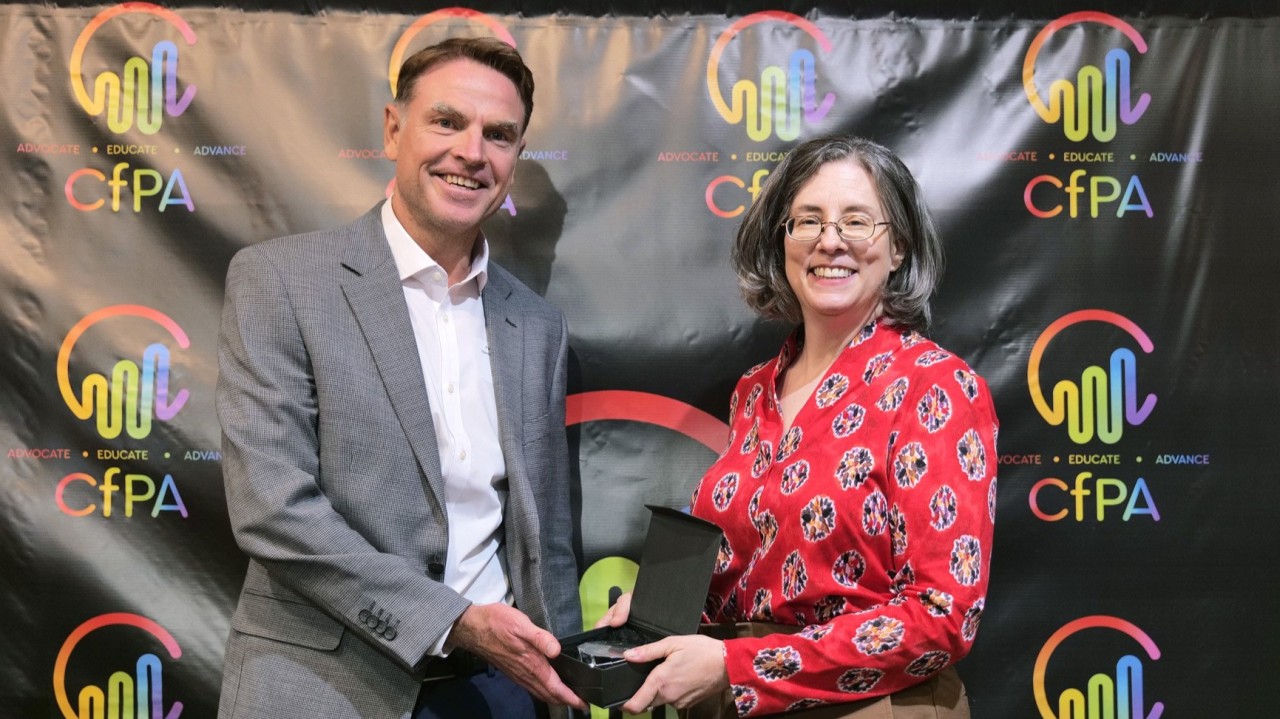
Today, as Principal Investment Advisor at Stakeholder Enterprise – the United States’ first investment advisory firm specializing in regulated crowd investing – and 2024 recipient of the Crowdfunding Professional Association’s prestigious ‘Pay It Forward’ Award, Lovejoy has become one of the industry’s most prolific advocates. His weapon of choice? A year-long experiment that would change how he – and potentially millions of others – think about building wealth.
The 366-Day Challenge: Investing Every Single Day
In 2024, Lovejoy embarked on what he calls his “Leap Year Portfolio”- investing in crowdfunding opportunities every single day for 366 consecutive days. Yes, even on vacation. (“My wife hated me,” he admits with a laugh.)
The parameters were simple but ambitious:
- Total invested: $12,000 over 366 days
- Average per investment: $31.52
- Portfolio allocation: 50% debt, 30% equity, 20% real estate
- Minimum investment: As low as $10
The results? Remarkable.
By the numbers:
- 432 real estate developer loans (only 3 defaults, zero actual losses due to collateral)
- 70+ small businesses supported
- 20+ family farms funded
- 33% cash flow return in just 20 months
- $4,000 returned and reinvested from the initial $12,000
“I wanted to show that you can have a legitimate financial plan without using our public stock markets,” Lovejoy explains. “But more than that, I needed to put my money where my mouth is. I needed to really understand what people go through when they make these investment decisions.”
The Hidden Power of Extreme Diversification
What Lovejoy discovered through his daily investment practice was transformative: diversification at scale is the ultimate risk mitigation strategy.
Unlike traditional public markets, where three institutional investors control retirement accounts and algorithmic trading concentrates wealth in just seven stocks (the “Magnificent Seven”), crowdfunding enabled Lovejoy to spread tiny investments across hundreds of opportunities.
“Some of these short-term real estate loans, I can do a $10 minimum and they would split that $10 into a dollar into different loans,” he explains. “The diversification of that – you can’t beat that in our public markets.”
This extreme diversification proved remarkably resilient. Out of 432 real estate loans, only three defaulted – and because the loans were backed by actual property, Lovejoy didn’t lose any money. The platforms were able to take control of the houses and recover the investments.
“This is investor protection right here,” Lovejoy emphasizes. “Diversification, not restrictive regulations, mitigates risk.”
Technology as the Great Equalizer
One of Lovejoy’s most surprising discoveries was how accessible due diligence has become for everyday investors – thanks to technology.
Yelp for Due Diligence: “I discovered Yelp is a fantastic place to do due diligence,” Lovejoy reveals. “You can see right away if a business just put up their Yelp page – huh, suspicious. Or if they had this Yelp page for five years with five-star reviews. There’s a lot that you could see as just a regular person very easily.”
AI as a Reading Assistant: “With AI coming into play, it can read these large documents very easily. You can copy text and put it into an AI and have it read for you. That is a huge help because that’s really what AI is best at – reading through documents. It’s either in the document or it’s not. There’s no opportunity to make stuff up.”
This democratization of information challenges the fundamental premise behind accredited investor restrictions—that only wealthy individuals have the sophistication to evaluate private market investments.
“You don’t have to be sophisticated to do this,” Lovejoy insists.
The Problem with SAFEs (And Why Crowdfunding Needs Its Own Instruments)
Through his extensive experience, Lovejoy identified a critical flaw in how the crowdfunding industry has developed: we’re using investment instruments designed for a completely different ecosystem.
The SAFE (Simple Agreement for Future Equity), invented by Y Combinator for their Silicon Valley incubator, has become the default instrument for equity crowdfunding. But there’s a problem.
“It was perfect for their ecosystem because they’re the ones doing the valuation in the next round,” Lovejoy explains. “The SAFE protects the founders and it doesn’t really protect investors all that much, but it didn’t matter to Y Combinator because they’re the ones that were gonna set the terms the next round.”
But in crowdfunding? “Nobody knew what they were doing in our industry. What are we gonna use? Let’s use Y Combinator’s SAFE. No one thought, ‘Hey, what works best for a crowdfunding industry?'”
Lovejoy’s solution: We need investment vehicles specifically designed for investment crowdfunding, not borrowed from incubators. He also advocates for alternative exit strategies beyond IPOs and mergers – like dividends and stock buybacks – that provide more predictable returns for retail investors building long-term wealth.
The Real Impact: Beyond Returns
While the financial returns are compelling, what struck Lovejoy most was the real-world impact his investments were making.
One company he invested in three times, Ovanova, dropped everything when a hurricane devastated a small mountain town in North Carolina. They arrived with chainsaws, cleared roads, and set up a solar microgrid that powered the general store for 47 days – becoming a literal lifeline for the community.
“I’m seeing my small investments go to this company and now they’re literally sending a lifeline to these people devastated by this disaster,” Lovejoy reflects. “That was like real impact.”
He invested in family farms building micro solar grids, earning 10% returns while supporting renewable energy. He funded clean energy projects and climate tech startups. He backed local small businesses creating jobs in their communities.
“It’s this awesome situation where I’m helping this family farm build a micro solar grid on it, and I’m getting a 10% return,” he says. “To me, it’s really hard to beat.”
Paying It Forward: A Philosophy of Enlightened Self-Interest
Lovejoy’s recognition with the CfPA’s ‘Pay It Forward’ Award reflects a philosophy that drives all his work: accepting responsibility for problems you didn’t create because it’s in your enlightened self-interest.
Drawing from his competitive water polo background, he explains: “My coach said, ‘While you guys were being reactive, they were being proactive.’ They’re not thinking, ‘We need to stop them from scoring.’ They’re thinking, ‘When we get the ball, I’m gonna be swimming down, beating my guy to score.'”
This proactive mindset extends to systemic change.
“When inequality deepens, social cohesion collapses,” Lovejoy observes. “People turn on each other instead of questioning the systems exploiting them. Furthermore, when people are stripped of opportunity and dignity, that’s when crime and violence rise.”
His conclusion: “Yes, it is in your self-interest, but you almost have to think of it as enlightened self-interest that it benefits me to have an economy that looks out for the wellbeing of others and our planet.”
Building Alternative Financial Infrastructure
For Lovejoy, the crowdfunding movement represents something far more significant than a new investment class – it’s the creation of entirely new financial infrastructure.
“The people who are involved, we are literally creating a brand new infrastructure for an alternative financial system,” he emphasizes. “It’s not one where large institutions or concentrations of wealth determine what gets built, what gets funded. It’s people.”
This infrastructure is being built through:
- Platform innovation enabling $10 minimum investments
- Regulatory frameworks like Regulation Crowdfunding creating legal pathways
- Technology democratizing due diligence and access
- Community connecting investors who care about impact with founders building solutions
“We get to build that infrastructure where no one is too big to fail, essentially,” Lovejoy says. “I just wouldn’t wanna be in any other space. It’s such a huge opportunity. Generational.”
Designing Out Fraud: A Circular Economy Approach to Regulation
When asked about the path to true cross-border crowdfunding, Lovejoy offered an innovative perspective borrowed from environmental design: the circular economy.
“The circular economy concept is you wanna design out waste and pollution in products,” he explains. “I think we can apply that in other areas. Why not create systems where we design out fraud and exploitation?”
Rather than simply creating laws to police bad actors after the fact, Lovejoy advocates for designing systems that make fraud unprofitable from the start.
“I think just saying, ‘Okay, we need to make laws to kind of police people,’ I think that may be a little bit of an outdated perspective,” he argues. “We need to take a step back and say, ‘If we design this system in the first place, let’s make fraud unprofitable. How do we do that?'”
This systems-thinking approach aligns perfectly with GECA’s mission to create regulatory frameworks that facilitate cross-border investment while maintaining investor protection – not through restriction, but through intelligent design.
Advice for New Investors: Start Small, Start Now
For anyone new to crowdfunding, Lovejoy’s advice is refreshingly simple:
“Start small. Find a $10 or $25 investment if you can. That’s the place to start.”
He learned more from making his first investment than from weeks of preparation. “It’s just practicing. Doing it is gonna teach you. And start small and go through the due diligence. Even if it’s a $25 investment, treat it like a $25,000 investment.”
His second piece of advice: Start with debt instead of equity.
“You’re gonna get returns happening to you a lot quicker. A lot of my investments were in loans, not equity -these were more debt-based. And I gotta tell you, after 20 months since I first started, I’ve already had a 33% cash flow return.”
This cash flow can then be reinvested, creating a compounding effect that builds momentum rapidly.
Advice for Founders: Community First, Always
For entrepreneurs considering crowdfunding, Lovejoy’s guidance is equally direct:
“You can’t just show up and expect people to invest in you.”
The most successful campaigns he observed shared common characteristics:
- Community building before launch (not expecting platforms to do marketing)
- Clear communication about use of funds and exit strategy
- Modeling successful campaigns in similar industries
- Marketing budget planning as part of the raise strategy
- Authentic engagement with potential investors
“You have to plan ahead, get your community involved, plan for a marketing budget, and look at how other people have done it before just jumping in,” he advises.
The Crowdfunding Revolution Is Just Beginning
Six months into his daily investment streak, Lovejoy had a humbling realization: “I look back and I was like, ‘I wasn’t as good as I thought I was.’ It’s like when you do something every day, there are things that you just see that you didn’t before.”
By the end of the year, his perspective had transformed entirely. “Now I don’t think I’m some great investor. I know that there’s a lot more to learn out there, but I am so much better than I was before I started that.”
This continuous learning – this willingness to question assumptions and remain humble in the face of complexity – exemplifies the spirit GECA champions in building a truly borderless crowdfunding ecosystem.
The Path Forward: Education, Collaboration, Global Integration
Lovejoy’s work intersects perfectly with GECA’s mission on multiple fronts:
Education: “The entire ethos of GECA is education,” Lovejoy observes. “And it’s kick-ass.” Whether educating founders about realistic exit strategies, investors about due diligence tools, or regulators about the power of designed systems over restrictive rules – education remains the foundation.
Democratization: Making sophisticated investment strategies accessible to everyone, regardless of wealth, geography, or “accredited” status.
Infrastructure Building: Creating the platforms, regulations, and tools that enable borderless capital flows while maintaining investor protection through design, not restriction.
Impact Alignment: Connecting capital with projects that generate both financial returns and positive social and environmental outcomes.
“I love the fact that you’re trying to eliminate borders for crowdfunding,” Lovejoy told GECA’s Andy Field. “I think that’s such a wonderful mission and I’m thrilled to be a part of it.”
Conclusion: The Alternative Financial System Is Here
Paul Lovejoy’s 366-day journey proves what many in the crowdfunding community have long believed: everyday people can build diversified, resilient, impactful investment portfolios outside traditional Wall Street structures.
His experiment demonstrates that:
- Extreme diversification through small investments works
- Technology has democratized due diligence
- Debt crowdfunding provides reliable income streams
- Impact and returns are not mutually exclusive
- The barriers to private market investing are arbitrary, not necessary
As Lovejoy continues his work through Stakeholder Enterprise and his Crowd Capital Blueprint program, he’s not just helping individuals invest – he’s helping build the infrastructure for an entirely new financial system.
“This is such a huge opportunity,” he concludes. “Generational. It’s an amazing opportunity that we all have in this industry.”
The question is no longer whether crowdfunding can compete with Wall Street. Paul Lovejoy’s 366 days proved it can. The question now is: Will regulators, platforms, and investors seize this generational opportunity to democratize wealth creation globally?
GECA believes the answer is yes. And with advocates like Paul Lovejoy putting their money – and their daily commitment – where their mouth is, the future of borderless, democratized, impact-driven investing has never looked brighter.
Connect with Paul Lovejoy:
- 🌐 Website: stakeholderenterprise.com
- 💼 LinkedIn: Paul Lovejoy
- 📧 Direct message: “Hey, I saw you on the GECA podcast”
Watch the Full GECA Podcast Episode: 🎧 Paul Lovejoy: From Financial Devastation to Daily Investment
Join the Global Crowdfunding Movement:
- Learn more about GECA: thegeca.org
- Become a member: thegeca.org/membership-app-form
- Follow GECA: LinkedIn | Twitter | Medium
The Global Equity Crowdfunding Alliance (GECA) works toward creating a truly borderless global equity crowdfunding ecosystem through industry collaboration, regulatory alignment, and international knowledge sharing.